Tapestry after Le Corbusier Taureau V 20th century, handmade weaving in wool on cotton weft, size 300 x 200 cm
Bring character and authenticity to your decoration with the Tapestry after Le Corbusier Taureau V XXth. This unique piece, handmade in wool on a cotton weft, has generous dimensions of 300 x 200 cm. It represents a perfect fusion between art and design, ideal for those who admire the aesthetic and genius of Le Corbusier. Charles-Édouard Jeanneret-Gris, known as Le Corbusier, is a Swiss architect, town planner, decorator, painter, sculptor, author, naturalized French, born October 6, 1887 in La Chaux-de-Fonds in Switzerland and died August 27, 1965 in Roquebrune -Cap-Martin in France.
- SKU: lct-23-rr
- Shipping:
- Return Policy: We understand that buying a rug can be a big investment and we want you to be completely satisfied with your purchase. For this reason, we offer a 30-day return policy for rugs purchased from our site. If you are unhappy with your rug for any reason, you may contact us within 30 days of receiving your order to request a return. Carpet must be in its original, unused, undamaged condition with all tags and accessories included. We reserve the right to refuse a return if the rug is not in its original condition. Return costs are the responsibility of the customer, unless the rug is faulty or we have made an error in your order. If your rug is eligible for a refund, it will be processed within 5 days of receipt of the returned rug. Please note that our 30 day return policy does not apply to personalized or bespoke rugs, which are subject to specific return conditions. We encourage you to read this information carefully before placing your order. If you have any questions regarding our return policy or would like to return a rug, please contact us and we will be happy to assist you.
Learn More
Le Corbusier | 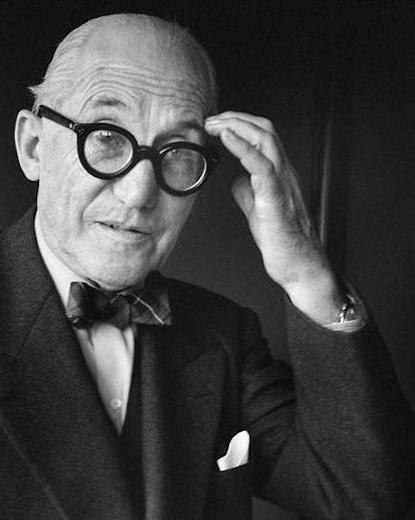 |
Charles-Édouard Jeanneret-Gris, known as Le Corbusier, was a Swiss architect, urban planner, decorator, painter, sculptor, and author who became a naturalized French citizen. He was born on October 6, 1887 in La Chaux-de-Fonds, Switzerland, and died on August 27, 1965 in Roquebrune-Cap-Martin, France. He is one of the main representatives of the modern movement, along with, among others, Ludwig Mies van der Rohe, Walter Gropius, Alvar Aalto, and Theo van Doesburg. He also worked with Robert Mallet-Stevens. Le Corbusier also worked in urban planning and design. He is known for being the inventor of the "unit of habitation," a concept he began working on in the 1920s, an expression of theoretical thinking on collective housing. "The unit of habitation of conforming size" (the name given by Le Corbusier) would not be built until the reconstruction after the Second World War, in five different examples, in Marseille, Briey-en-Forêt, Rezé, Firminy, and Berlin. It would become a solution to the housing problems of the post-war period. His design envisaged all the community facilities necessary for life—daycare, laundry, swimming pool, school, shops, library, meeting places—in a single building. Le Corbusier's architectural work, which includes seventeen sites (ten of which are in France, the others being spread across three continents), was listed as a UNESCO World Heritage Site on July 17, 2016. A European cultural itinerary entitled "Destinations Le Corbusier: architectural walks" was created in early May 2019. The work and thought of Le Corbusier were particularly influential on the post-war generations of architects and widely disseminated, before entering, with the period of postmodernism, into a phase of significant and regular contestation6. He is the father of modern architecture, being the first to replace exterior load-bearing walls with reinfo Manufacturing hand woven Materials Wool and cotton Form Rectangular Age 21st century Inspiring artist Le Corbusier Cut 300 x 200 cm Color Multicolor Similar Items | |