Sam Francis 20th century after Artistic rug in high quality wool velvet cotton weft hand knotted numbered 1/8 300 x 200 cm
Bring a unique piece of art into your space with the 'Sam Francis 20th Century After Artistic Rug High Quality Wool Pile Cotton Weft Hand Knotted Numbered 1/8 300 x 200 cm'. This artist rug, inspired by the famous painter Sam Francis, is woven with a premium wool pile and a sturdy cotton weft, entirely by hand. Limited edition and numbered 1 of 8, each piece is a true work of art measuring 300 x 200 cm.
- SKU: sf-23-mn
- Shipping:
- Return Policy: We understand that buying a rug can be a big investment and we want you to be completely satisfied with your purchase. For this reason, we offer a 30-day return policy for rugs purchased from our site. If you are unhappy with your rug for any reason, you may contact us within 30 days of receiving your order to request a return. Carpet must be in its original, unused, undamaged condition with all tags and accessories included. We reserve the right to refuse a return if the rug is not in its original condition. Return costs are the responsibility of the customer, unless the rug is faulty or we have made an error in your order. If your rug is eligible for a refund, it will be processed within 5 days of receipt of the returned rug. Please note that our 30 day return policy does not apply to personalized or bespoke rugs, which are subject to specific return conditions. We encourage you to read this information carefully before placing your order. If you have any questions regarding our return policy or would like to return a rug, please contact us and we will be happy to assist you.
Learn More
| Sam Francis | 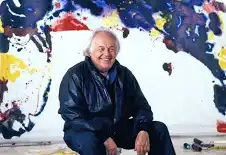 |
| Samuel Lewis Francis, known as Sam Francis, is an American painter, famous for his non-figurative painting, born June 25, 1923 in San Mateo (California), died November 4, 1994 in Santa Monica. He developed in his paintings a new aesthetic of color, a new conception of the canvas, of the artist's gesture, thus inscribing himself in the different movements of his time initiated and developed by American artists such as Rothko, Pollock, de Kooning, Kline. Sam Francis did not originally intend to pursue an artistic career, but began studying medicine and psychology. In 1943, he joined the army as an aviator, but in 1944, his plane crashed in the middle of the desert during training. Injured, he was hospitalized for two years. It was during his hospitalization that he became interested in painting: initially to pass the time, he ended up practicing it for pleasure. He remained convinced of the therapeutic virtues of art throughout his life, and he would say: “My painting came from illness. I left the hospital through my painting. I was suffering in my body […] and it was because I was able to paint that I was able to heal myself[ref. needed].” After leaving the hospital, he began studying art at Berkeley and then in 1946 he went to San Francisco to study with Clyfford Still, an artist he had discovered at an exhibition. He and the other Berkeley students were deeply impressed because "Still's pictures were organic, his colors and surfaces had nothing in common with what we had been taught to regard as 'good' modern painting [...] something new, something that, for the most part, we could not define, had just appeared." After this first real encounter with abstract art, he left for Paris around 1948-1949. It was there that he met a number of American artists, who are now called action painters, who would "complete" his approach. On large-format canvases (which he would move to very quickly, out of necessity), he would borrow and mix various techniques from them: dripping, all-over, he was even called a tachiste, a name that refers to the chance of creation: the form is a stain, subject to chance, and emerging spontaneously. | |